
Introduction
Most office managers handle a commercial move once or twice in a career, so it’s hard to know what to expect. This guide walks through how a professional office relocation works, step by step, and what you can do at each stage to keep costs predictable and your team working.
Step 2: Review Your Quote
Your quote is based on the details you shared.
For larger or more complex moves, a walkthrough of your current space gives a more precise estimate.
When you review a quote, check that it covers everything your move needs: packing materials, disassembly and reinstallation, IT handling, furniture disposal and any storage. A lower quote that leaves these out often costs more by the end.
Step 3: Plan With a Move Coordinator
Once you approve the quote, a move coordinator starts planning. On a small move, that may be one person working with your office manager. On a large or multi-floor move, it may be a full move-management team.
Planning typically covers:
- A move schedule, including any phases by floor or department
- A labelling system that matches the new floor plan
- Building bookings: elevators, loading docks and any insurance certificates your landlord requires
- IT disconnection and reconnection
- Moving bin delivery and pickup dates
- Communication with your team, so everyone knows when to pack and where to go
Step 4: Choose the Services You Need
Professional office relocation is flexible. You hire only the services your move needs, whether that’s bins and a crew or full move management. Common services include:
Office moving, from a single team to a full building
Moving bin rental, delivered before the move and collected after
IT equipment moving, with careful disconnection and setup
Furniture installation and reconfiguration in the new space
Office furniture removal, with reuse and recycling where possible
Moving and storage, for furniture or files that need a temporary home
Step 5: Moving Day
Most office moves happen after hours or over a weekend so your business keeps running. Your move coordinator manages the crew, the building and the schedule. Your role is to be reachable for decisions and to confirm that each area is set up as planned.
Step 6: The First Morning
The real test of an office move is Monday morning, when your team walks in. Can people find their desks? Do the computers work? Is the printer where the floor plan says it is? A professional move plans for that first morning from the start, so it feels as normal as possible.
How Far Ahead Should You Plan?
As a general guide, a small office move needs at least one to two months’ notice to book your preferred date. Larger or multi-floor moves are best planned six months or more ahead, especially if you’re coordinating furniture, IT and a new build-out. Building bookings and after-hours dates fill up fastest, so the earlier you start, the more choice you have.
Why Use Professional Office Movers?
- Flexibility: you hire the services you need and handle the rest in-house.
- Peace of mind: an experienced coordinator keeps the move on schedule while you keep the business running
- Less disruption: a planned move protects your team’s routine, which keeps people positive and makes the transition smoother.
Frequently Asked Questions
How much does an office move cost?
It depends on the size of your office, what’s moving, the distance, building access and timing. That’s why sharing complete details up front matters: it’s the fastest way to an accurate quote.
Can you move our office after hours or on a weekend?
Yes. Most office moves are scheduled outside business hours to keep downtime to a minimum.
Do we need to pack ourselves?
It’s your choice. Many businesses have employees pack their own desks into rented moving bins, while movers handle furniture, IT and shared areas. Full packing services are also available.
Is Office Move Pro insured?
Yes. Office Move Pro is insured for commercial and office moves, and additional coverage is available if your move needs it.
Where does Office Move Pro operate?
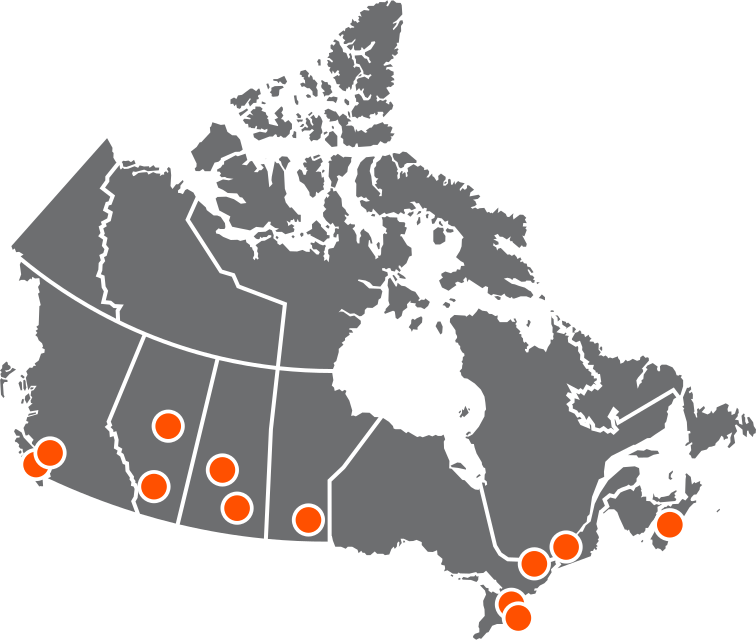
We have 13 locations across Canada, from Victoria to Halifax. See all locations.
Ready to plan your move?
Tell us about your move and we’ll prepare an accurate quote. Call your local office or get a quote online.